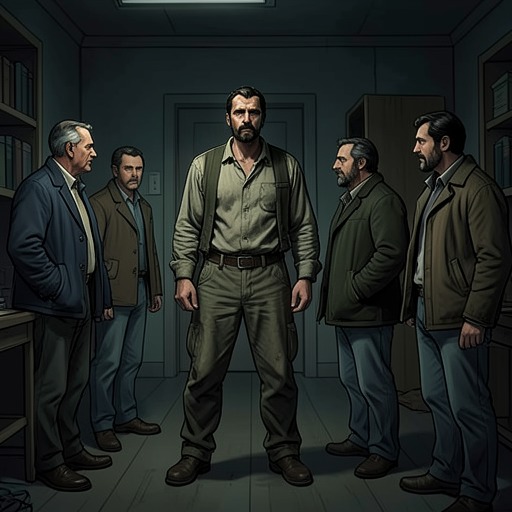
Poe decides to apply to college again
American RustBilly Poe’s decision to apply to college again is a reversal with practical and moral stakes: after once rejecting college and taking a job in Buell, he resolves to pursue school while confronting guilt over Otto’s death and the consequences closing around him. The decision is not yet an accomplished departure. It begins as a promise to call a coach, grows into plans for applications and a September start, and is tested by his mother’s skepticism and the criminal case that threatens to interrupt it.
The choice he had postponed
Billy Poe’s earlier rejection of college had not followed from a lack of opportunity. His coach at Buell High, Dick Cannedy, had helped him get into three colleges. Colgate University, in upstate New York, had seemed like a good option, and its coach had told him he could get in touch if he changed his mind. Poe had told himself he was not ready. Looking back, however, he recognizes that he had been ready to go; what weighed on him was the pressure of people around him telling him what to do.
His response had been to refuse the expected path altogether. He turned down college and took a job at Turner’s Ace Hardware, a choice he remembers as giving the whole town the middle finger. Now he imagines leaving for college just as abruptly, again defying the expectations he had rejected before. The new resolve therefore does not simply restore his old plan. It changes its meaning: education becomes a choice he is making for himself, rather than an answer to other people’s demands.
Guilt and the decision to call
The decision takes shape while Poe is thinking about Otto, whose body lies in the machine shop after their confrontation. Poe considers whether he should have called Bud Harris, who had helped him out of trouble before, but believes that it is already too late to avoid looking guilty. He also weighs the circumstances of the fight: Otto had thrown punches and seemed about to do worse, but Poe cannot use that distinction to quiet his sense of responsibility for the death.
Against that immediate guilt, he sets the life he had expected to be living: attending classes and moving on from Buell. His thoughts return to the college opportunity he previously refused. The Colgate coach’s invitation gives the change a definite first step, and Poe decides he will call. In the same sequence, the idea that things might now be all right is interrupted by the discovery that his letter jacket, bearing his name and player number, is still in the machine shop beside the body. He fears the jacket will connect him to the scene and that he, rather than Isaac English, will be the one pursued. His resolution to pursue school thus emerges not from freedom from danger, but while he is imagining how the danger may fall on him.
Turning intention into a plan
By April 10, Poe’s intention has become more specific. On a warm morning, he thinks about going to the library to fill out applications and about the days continuing to pass. His reflection on being alive gives the plan a new urgency: he takes the day as a reminder that breathing itself matters, even when other parts of life are going badly. The library, rather than a distant or abstract ambition, is where he expects to begin.
Selling his car is part of the same plan. His 1973 Chevrolet Camaro has been left beside the driveway after a tow, with leaves and dirt on the new paint. A race with Dustin McGreevy’s Subaru ended with the Camaro’s transmission damaged, making the car less useful as a possession and more relevant as something Poe can sell. He considers replacing it with an older Honda Civic or Toyota Tercel, practical cars that use less gas. His willingness to exchange the Camaro for something modest signals a change in what he is prepared to value; he even catches himself thinking that he would have found the smaller car unthinkable only a month earlier.
When his mother returns unexpectedly, dressed for church, she finds him in the driveway washing the car. Poe tells her he is selling it, then explains that he intends to attend college in September. He plans to call the coach at Colgate and says he will consider other schools as well, while ruling out California University of Pennsylvania. The announcement joins the car sale, the college applications, and the deadline of September into one proposed course of action rather than a passing wish.
Doubt, preparation, and danger
His mother does not immediately accept the promise. She says little at first, and Poe can tell that she does not believe him. When she asks whether he is really going or merely saying so to avoid being charged rent, her question makes the test of his resolve plain: reassurance alone will not establish that his plans have changed. Poe answers that he will go to the library and send the applications soon. His mother asks about teacher recommendations and transcript copies, steps he had overlooked. He acknowledges the omission and says he will handle them too. The exchange shows both his determination and how early the process remains; he has committed himself, but has not yet completed even the practical preparations.
There are pressures beyond his mother’s doubt. Her hands have been getting worse, and Poe recognizes that she may soon be unable to work much, especially through winter. The scene does not show him abandoning his plan in response, but it places his proposed departure within a household whose circumstances are becoming more difficult. His promise of September schooling is therefore set against a responsibility he has only just begun to acknowledge.
The criminal case also threatens to overtake the future he is trying to arrange. Bud Harris tells Poe he may go home for the night, but says he will come to collect him before the state police do; Harris instructs him to destroy the shoes and any receipts and warns him that running would ensure prison. Later, Billy Poe is in custody and has refused to see his lawyer for several days before being stabbed and nearly dying. These developments do not establish that his college plan is formally abandoned, but they expose how little control he has over whether he can carry it out. The renewed application plan matters precisely because it points toward a life beyond the immediate case, even as that case increasingly dictates his near future.